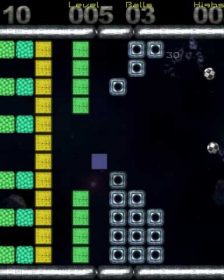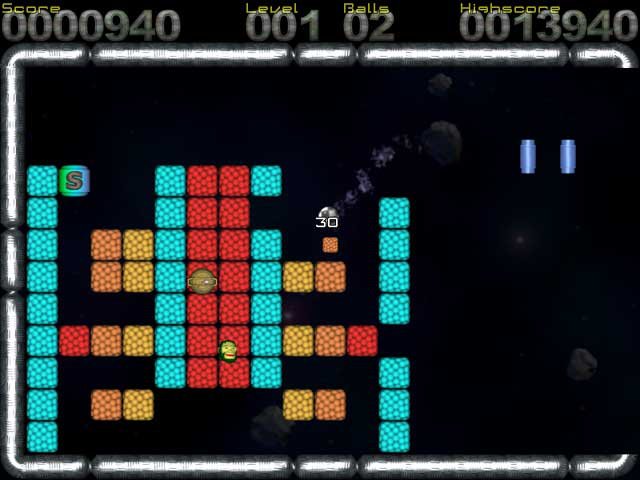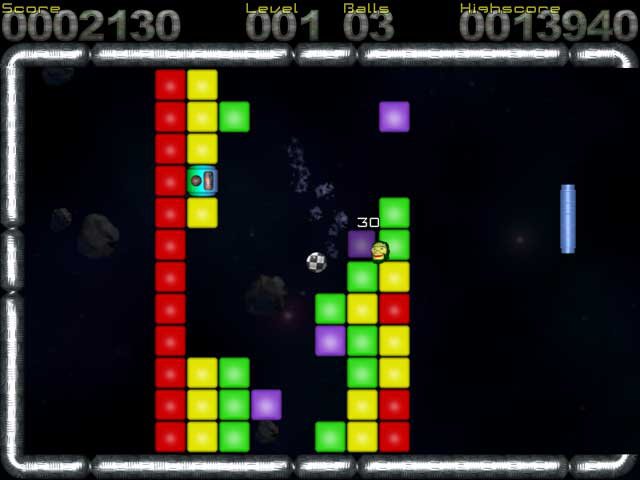
Yes, it’s another game inspired by Krakout.
Mid-2013.
The idea was simple: “I’ll take Krakout and Arkanoid: Space Ball, quickly rework them, and release something new.” Yeah, right – wishful thinking. “Quickly” didn’t happen for several reasons: the old game code was useless, and even looking at it hurt my eyes; plus, the plan was to use a new (for that time) version of the engine and replace my old simplified math with the Box2D physics engine.
So the old projects “voluntarily shared” only some assets and ideas – the game itself was written entirely from scratch. Levels in the game were grouped into worlds – there were 10 worlds in total, each containing between 10 and 40 levels.
To save time, some worlds were copied from previous games. But several levels and even entire worlds were newly designed. Different people worked on different levels and worlds.
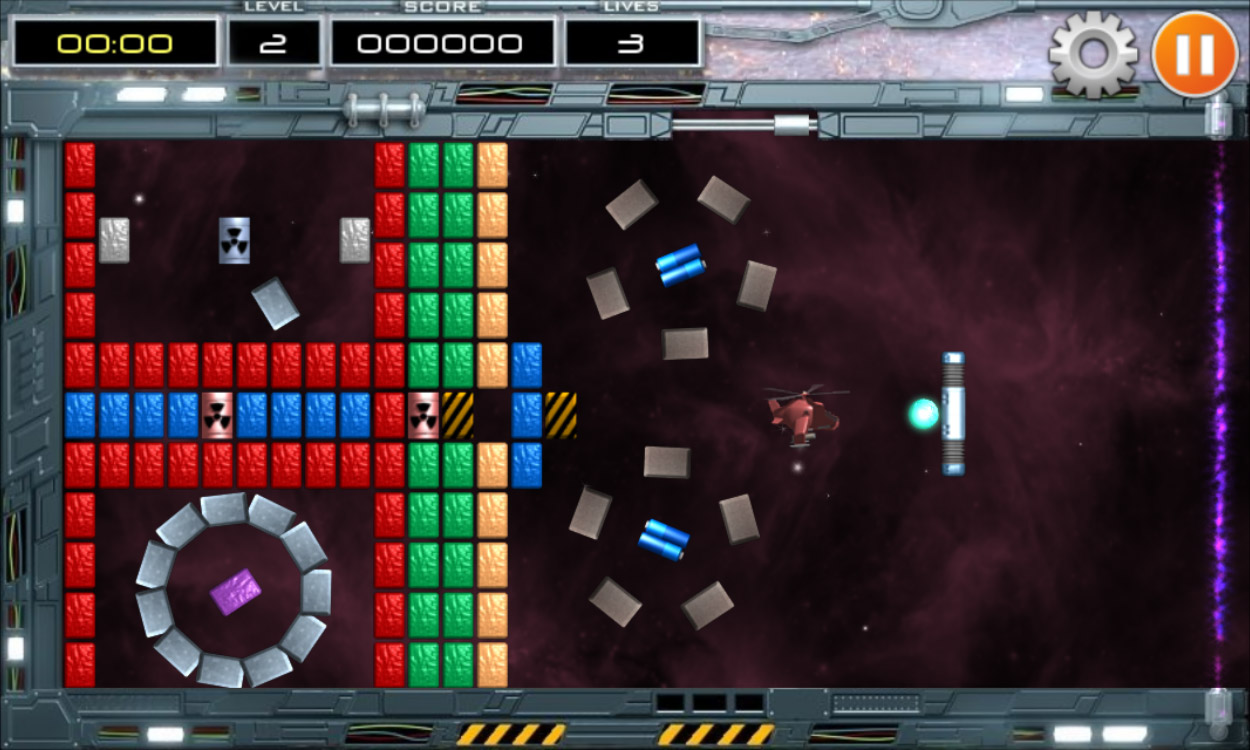
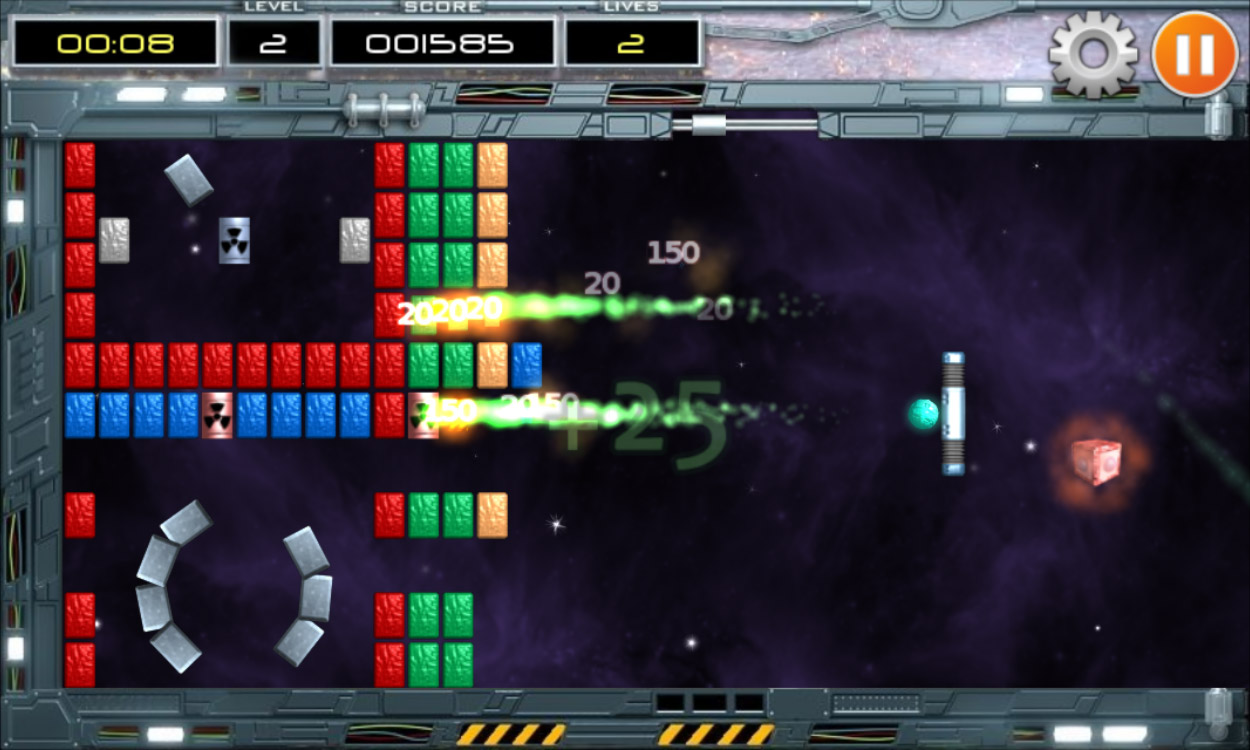
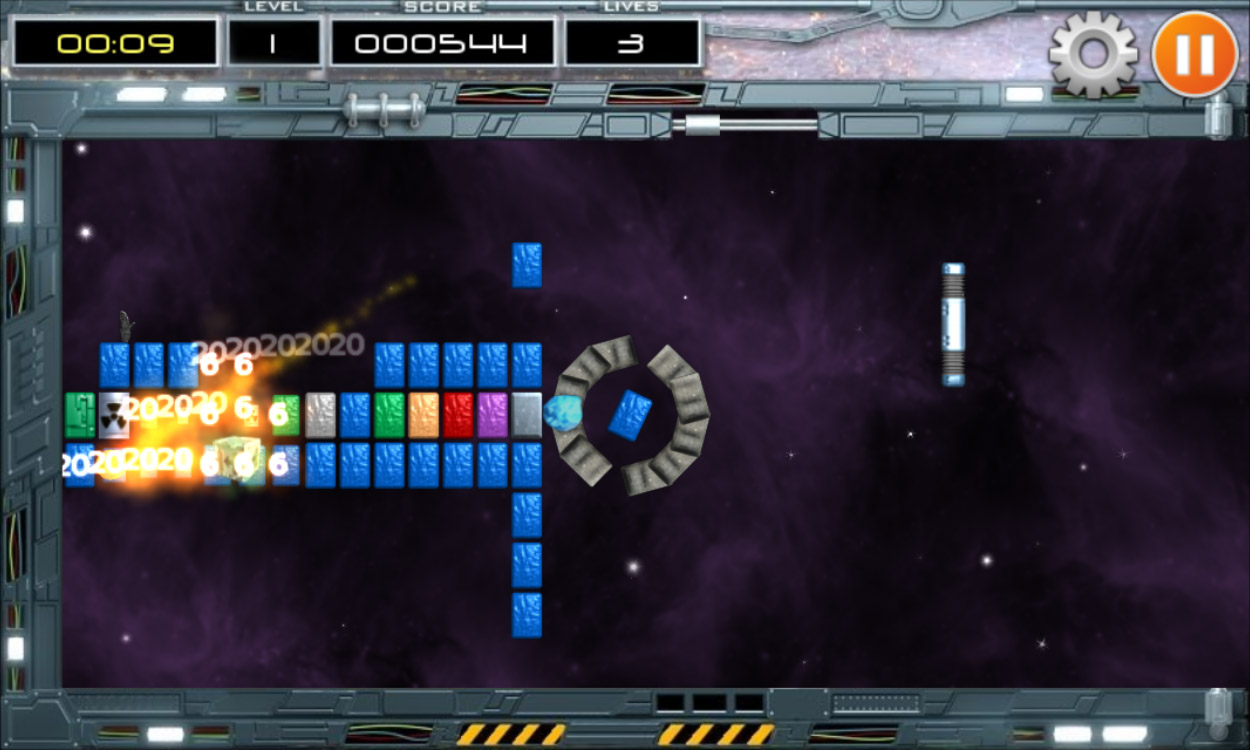
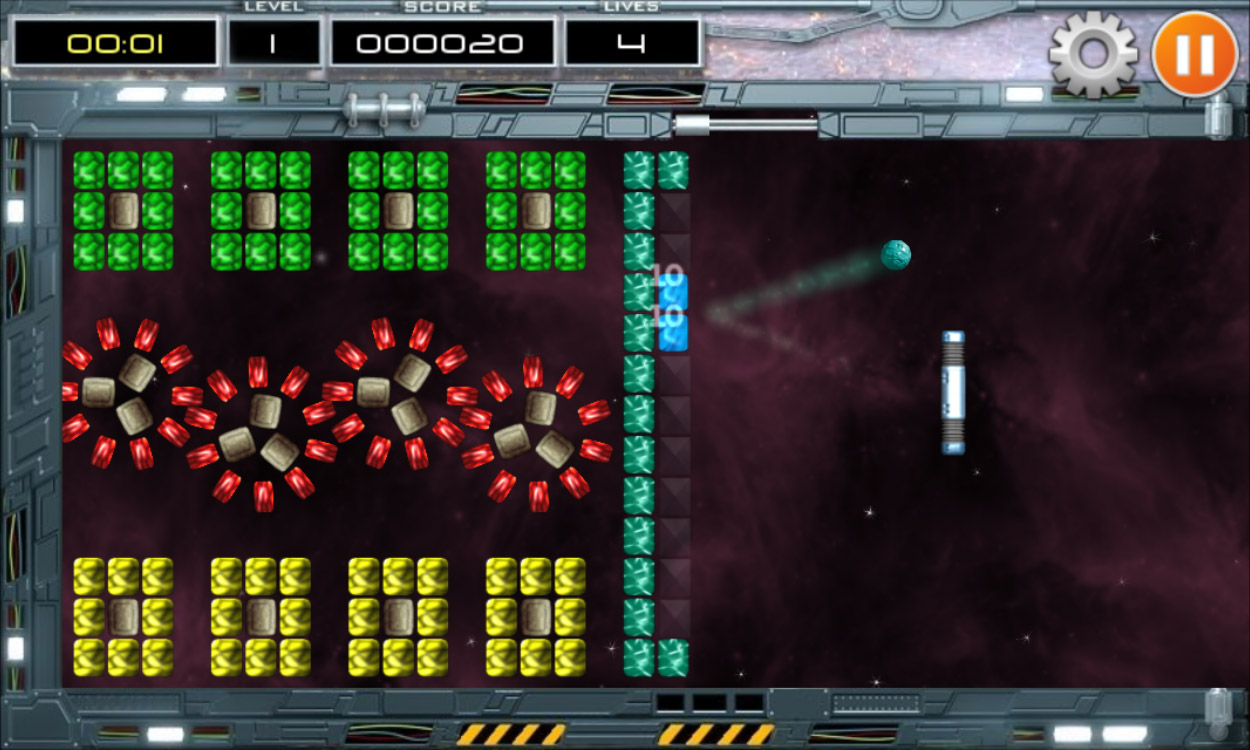
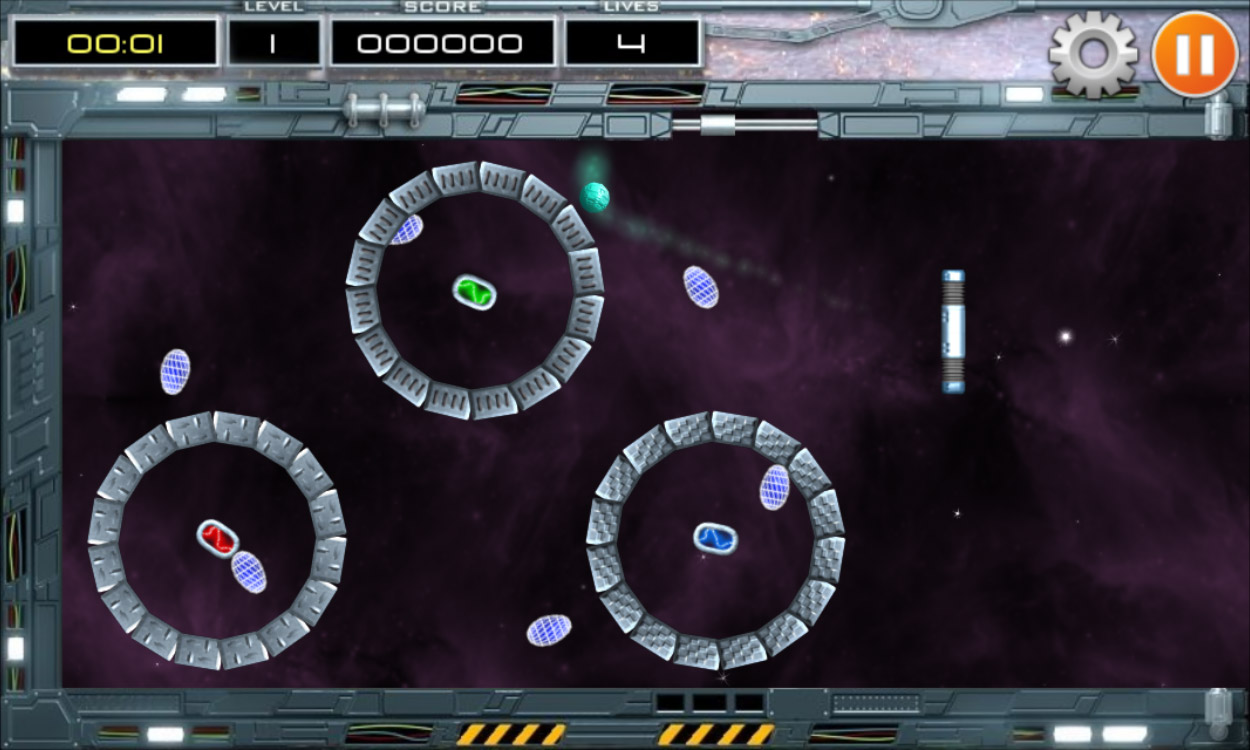
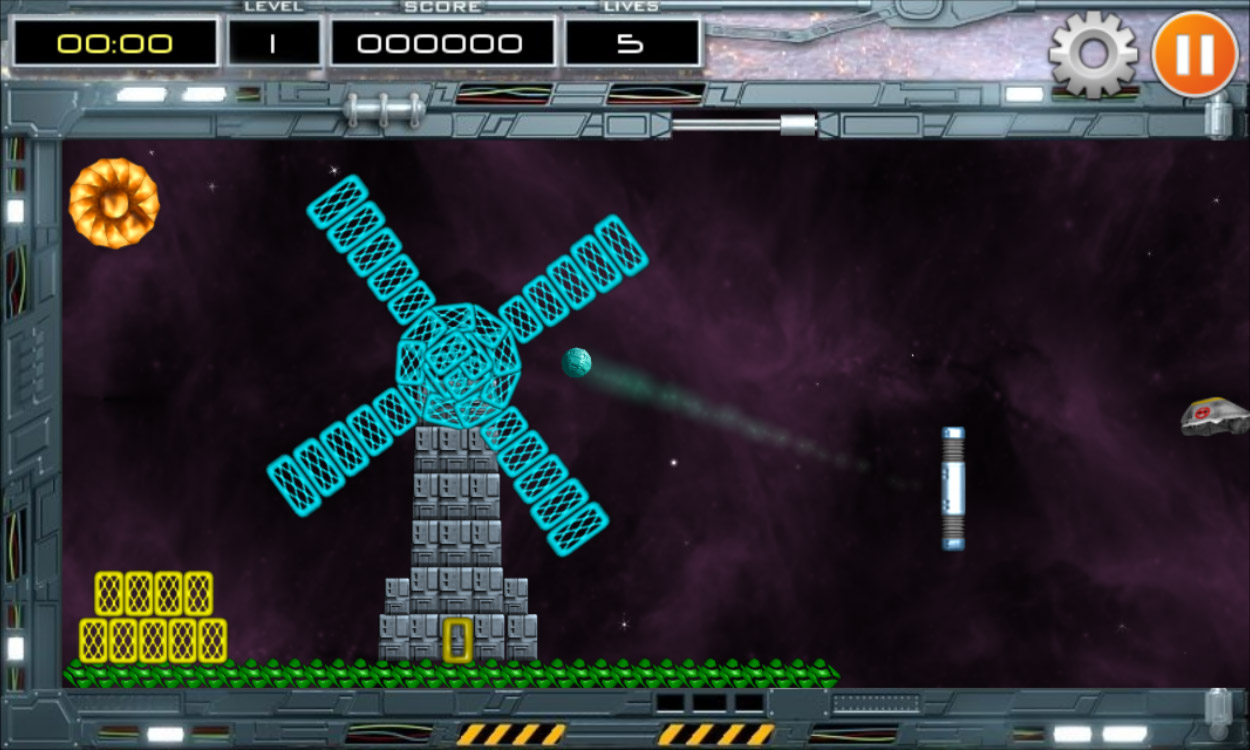
Because the game’s levels were meant to be dynamic, an external editor was created for building episode worlds. Level data was stored in XML, describing object types, appearance, behavior, and durability. The editor worked with object groups – for example, a circular trajectory with radii R1 and R2, rotation speed and direction, and the number and type of objects on it. When loading a level, each object became independent in the game while still visually belonging to its group.
Target platforms were iOS, Android, Android TV, OUYA, Linux, macOS, and Windows. Both the game and the engine were written in C++. Development was done under Linux, in my favorite editor – VIM.
At one point, a publisher from China requested the game. I had to implement special, localized payment methods. The tricky part was that each mobile operator had its own SDK for different payment systems. It was impossible to test integrations locally, so I had to rely on sparse documentation and my own experience. I don’t remember how long it took to implement all the payment options, but the work was eventually completed. A special build of the game was sent to the publisher for testing – after which the publisher disappeared.
And that wasn’t the first publisher to vanish after receiving a build.
«Geniuses learn from others’ mistakes, smart people learn from their own, and only fools keep repeating the same ones»
© Folk wisdom