lazy game developer

Showing: 1 - 2 of 2 RESULTS
Tricky Blocks logo

Tricky Blocks

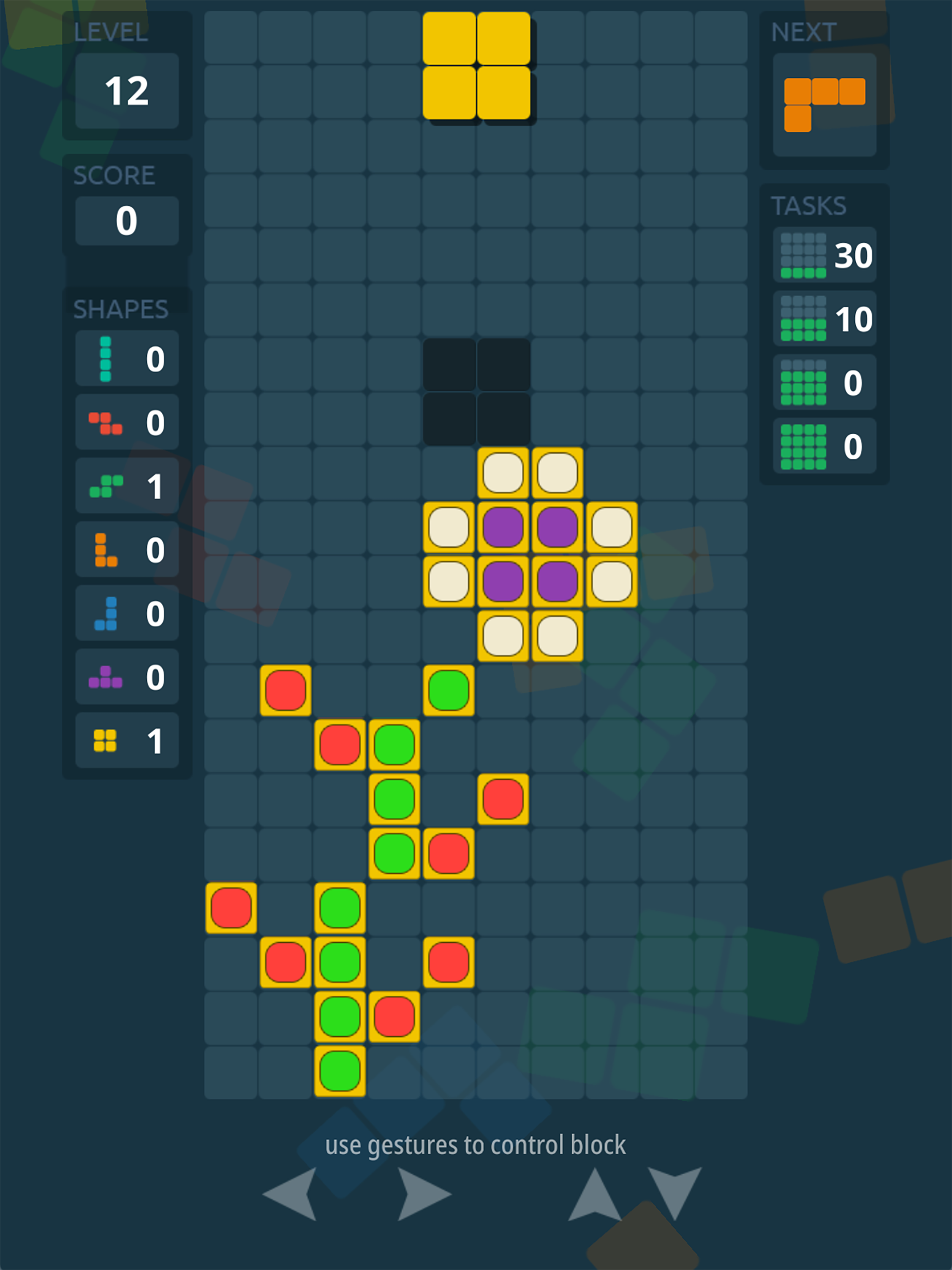
Tricky Blocks is a classic Tetris-style game with expanded gameplay. Players progress through levels by completing various objectives. These can include destroying a specific shape or clearing a certain number of lines – single, double, triple, or even quadruple.

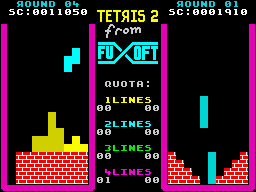
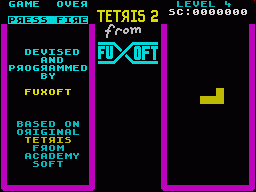
The game is inspired by the original Tetris from Fuxoft. Below are a few screenshots of the original game running on the ZX-Spectrum.
On mobile devices, the game is controlled via gestures, while on the web and desktop, you can use a keyboard.

Tricky Blocks is available on iOS, Android, Facebook Instant Games, Yandex.Games, and the web. The game is built on my custom C++ engine, which I use for all of my projects. Since development was done on macOS, a version for this platform is also available.

The game includes a level editor, allowing you to create and edit levels and test them immediately. The editor is only accessible in the developer version; it is not included in the public release.
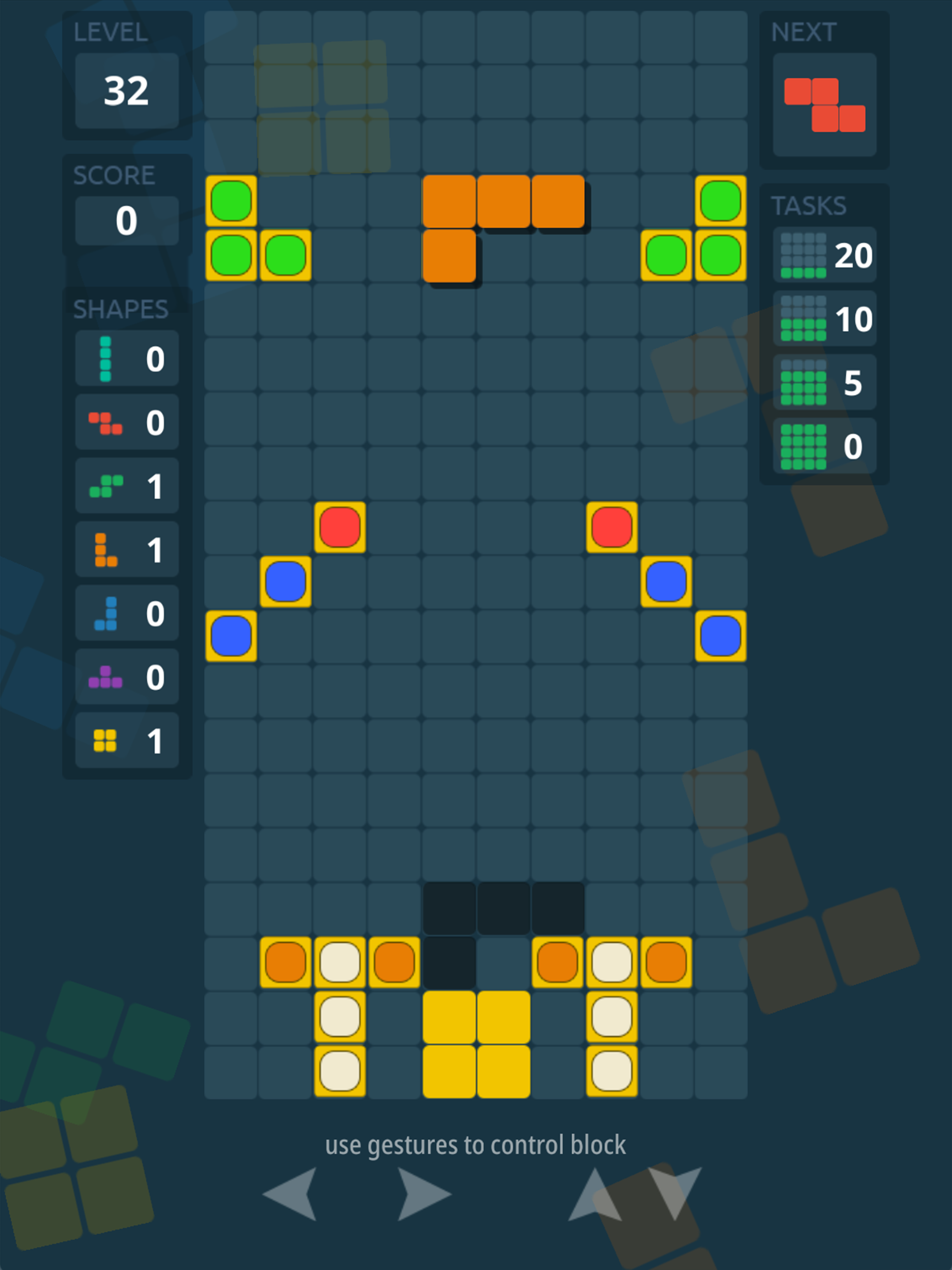
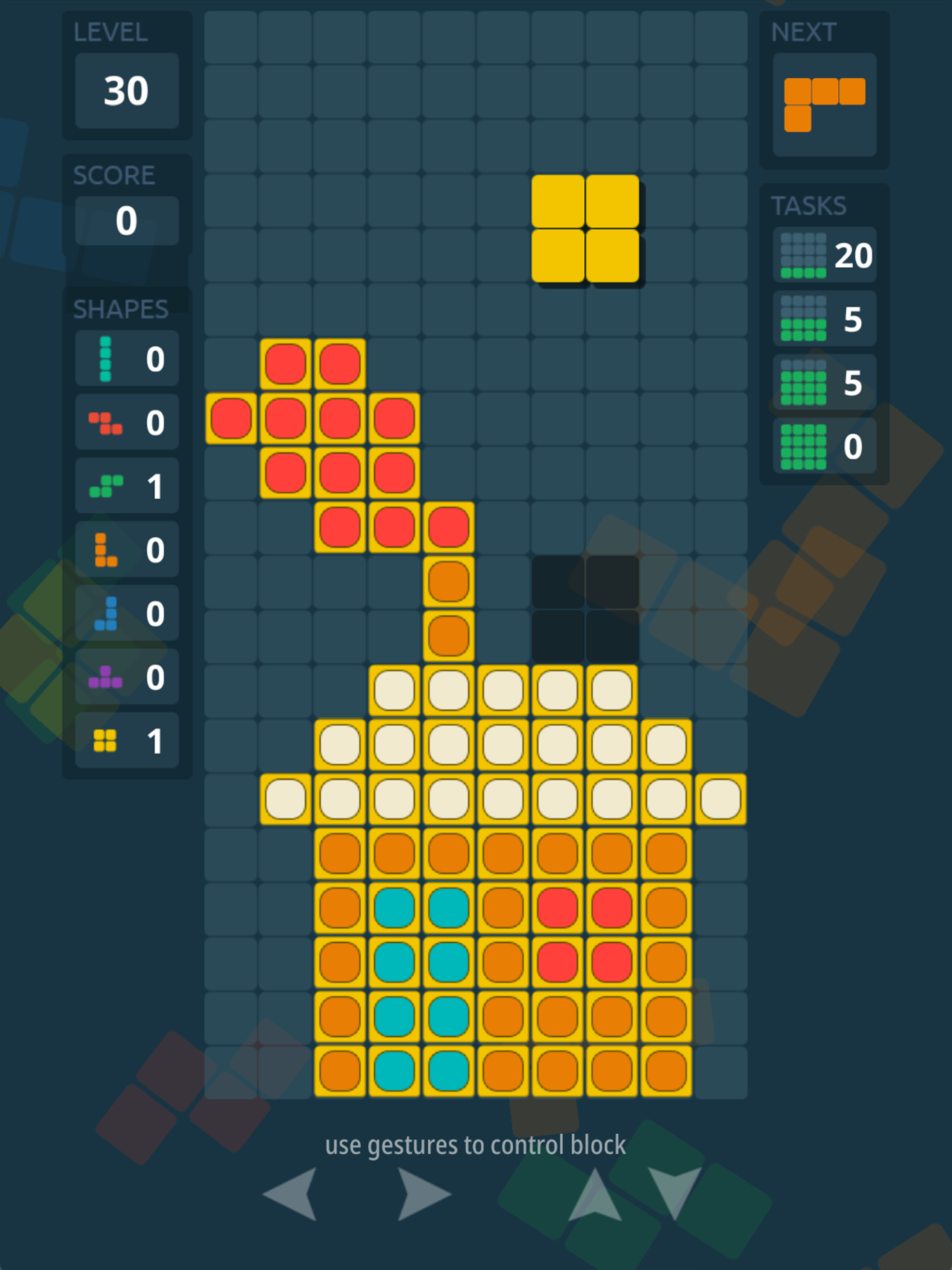
One unique feature of Tricky Blocks is that shapes move smoothly across the grid, rather than snapping abruptly from cell to cell, as in most Tetris games.

The most challenging part of development was iterating on the game design and interface layout to make it look good across different aspect ratios. I solved some of these issues, but I believe there’s still room for improvement. Designing and balancing the levels was also difficult – and unfortunately, the balance isn’t perfect yet.

Tricky Blocks for Web browser.
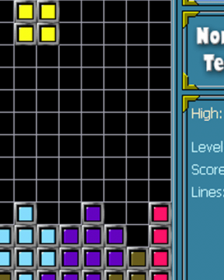
Color Tetris for Windows

Color Tetris

Two versions of this game were released — one for DOS and one for Windows.

1997 and 2002

It was a classic Tetris that included several variations: Tetris, Pentix, and Color Tetris.

What made this Tetris special was its support for network play with up to 5 players. When a player cleared two or more lines at once, random blocks would be added to the opponents’ wells.

The DOS version was written in Borland C 3.1. Apart from the network mode, its distinctive feature was a Windows 95–style interface. The network was implemented over the IPX/SPX protocol.

The game was written in C entirely from scratch, without any engines or third-party libraries, except for the IPX/SPX library. For graphics output, it used direct memory access. On startup, the game created interface elements in a memory area outside the visible screen, then copied them into the visible part for rendering. Because of this approach, the game wouldn’t run under Windows 95, even in compatibility mode. Unfortunately, the source code for this version has not survived.

I couldn’t find a screenshot of the DOS version.

If I recall correctly, the Windows version was written in C using Visual Studio 6. For the engine, it used the CDX library. The game had a client-server architecture: any player could act as the server, and the others would connect to them. It ran over TCP/IP. Thankfully, I was able to preserve the source code for this version.

Color Tetris for Windows
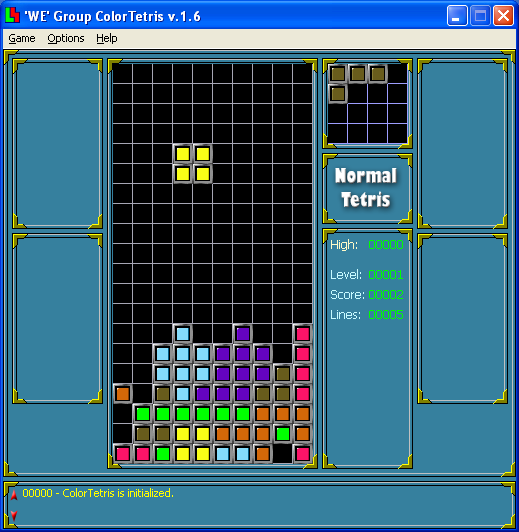
Windows version in normal mode