lazy game developer

Showing: 28 - 29 of 29 RESULTS
Krakout RE

Creeping Revolution

I check the logs of my web server fairly often, though not very closely. Referrers are particularly valuable to me. Usually, I’m aware of all the reviews related to my games, but this review came as a complete surprise…
The modern boom in Arkanoid-style games arguably began back in 1997 with DX-Ball. It’s not that the game brought much new to the genre — it was simply made very well, and its popularity can be explained by the clever use of Microsoft DirectX’s technological capabilities.

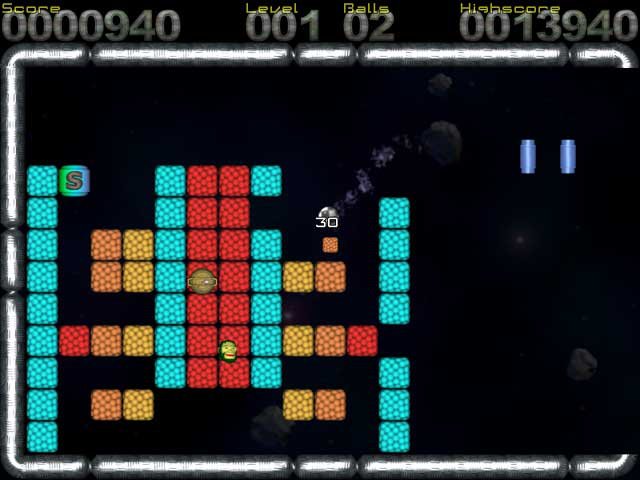
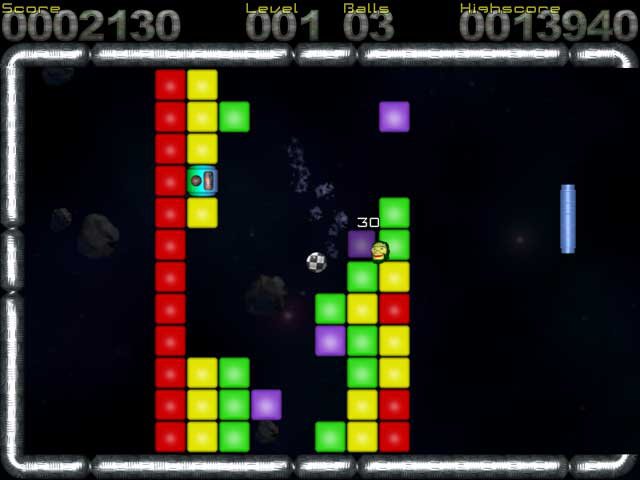
Following the same technological path were the developers from the ‘WE’ Group, who released Krakout RE. To be fair, this game isn’t based on the original Arkanoid, but on a later clone — Krakout, which was once well-known among ZX-Spectrum, Commodore 64, and Amiga users. The authors managed to create a visually stunning game that actively uses the power of modern graphics cards and delights the eye with pleasant animated graphics.

A key feature of the game is its unique level generator. Essentially, the game is endless, as completely new levels are created each time you start it. Also noteworthy are the excellent musical soundtrack, the ability to save your game, and the option to share your achievements with other players by publishing results online.

In addition, the authors added several original bonuses that don’t “drop” from broken bricks but remain in place. For example, among negative bonuses, you might encounter a cannon that shoots at your paddle and freezes it upon impact.

Source.
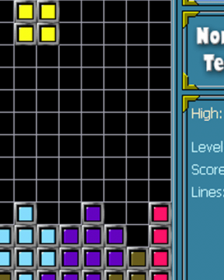
Color Tetris for Windows

Color Tetris

Two versions of this game were released — one for DOS and one for Windows.

1997 and 2002

It was a classic Tetris that included several variations: Tetris, Pentix, and Color Tetris.

What made this Tetris special was its support for network play with up to 5 players. When a player cleared two or more lines at once, random blocks would be added to the opponents’ wells.

The DOS version was written in Borland C 3.1. Apart from the network mode, its distinctive feature was a Windows 95–style interface. The network was implemented over the IPX/SPX protocol.

The game was written in C entirely from scratch, without any engines or third-party libraries, except for the IPX/SPX library. For graphics output, it used direct memory access. On startup, the game created interface elements in a memory area outside the visible screen, then copied them into the visible part for rendering. Because of this approach, the game wouldn’t run under Windows 95, even in compatibility mode. Unfortunately, the source code for this version has not survived.

I couldn’t find a screenshot of the DOS version.

If I recall correctly, the Windows version was written in C using Visual Studio 6. For the engine, it used the CDX library. The game had a client-server architecture: any player could act as the server, and the others would connect to them. It ran over TCP/IP. Thankfully, I was able to preserve the source code for this version.

Color Tetris for Windows
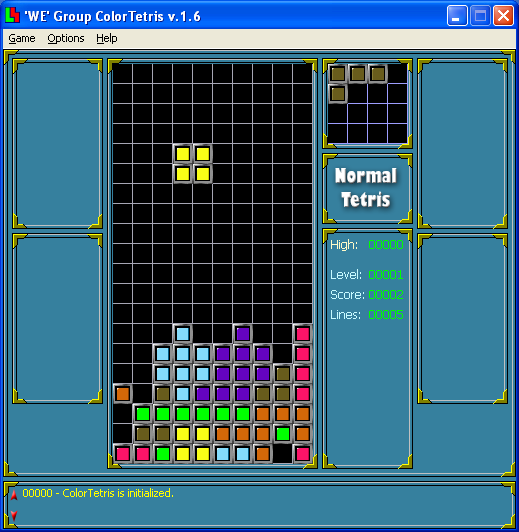
Windows version in normal mode